
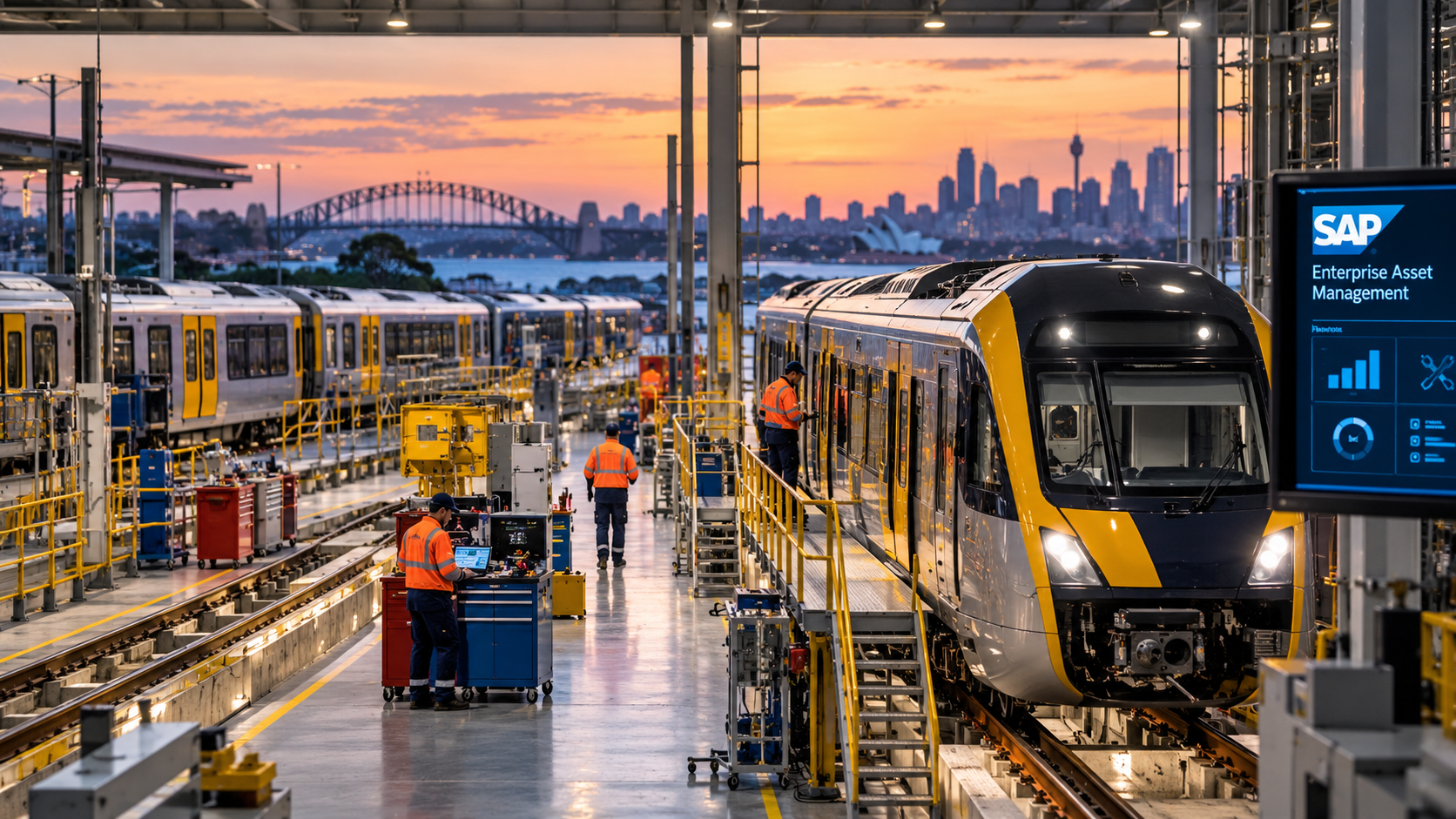
Helping a major transport organization move from traditional maintenance practices toward a more structured, asset-management-led operating model.
As part of a significant investment in SAP Enterprise Asset Management across its transport division, the organization needed to ensure that new technology was supported by equally strong processes, behaviours, and asset-management thinking. JBA supported Fleet Maintenance through this period of major process and cultural reform, helping the business define the right operating approach before embedding it into the new SAP EAM environment.
Project Description - Aligning Technology, Process, and Asset Management
The transport division in Sydney, Australia was investing in SAP Enterprise Asset Management as part of a broader effort to improve the way assets were planned, maintained, and managed.
Within Fleet Maintenance, the existing operating model was largely maintenance-driven rather than asset-management-led.
Long-established working practices were deeply embedded in the organization, and many processes had evolved around short-term planning, engineering judgement, and existing ways of working.
The implementation of SAP created an opportunity to do more than simply digitize those processes.
JBA was brought in to provide business expertise and continuity across the review process, helping Fleet Maintenance define a more effective operating model and ensure that the new system reflected improved asset-management thinking rather than simply replicating existing practices.
The Challenge - Moving Beyond Existing Maintenance Practices
The challenge was as much cultural as technical.
Existing practices were often assumed to be adequate because they had been used for many years. Planning tended to be short-term, work requirements were not always defined in sufficient detail, and engineering decisions often drove maintenance activity without a broader asset-management framework.
There was also a natural tendency to take existing processes and transpose them directly into SAP.
Doing so risked embedding historic inefficiencies into a new technology platform.
The organization therefore needed to challenge established thinking, define clearer asset structures, and create processes that would allow SAP EAM to support a more strategic approach to fleet maintenance.
JBA's Approach
Business-Led Process Review
Management Engagement & Continuity
System & Asset Structure Design
Results & Impact - Creating the Foundation for Better Asset Management
The Fleet Maintenance blueprint was successfully finalized while business-as-usual operations continued throughout the transformation.
The programme helped shift thinking away from simply reproducing existing maintenance practices and toward a more structured asset-management approach.
Management teams developed a clearer understanding of how processes needed to change, while the SAP system design was shaped around that new way of thinking.
The work also established defined asset structures designed to support future optimization within SAP EAM, creating a stronger foundation for planning, maintenance, and long-term asset performance.